Beginner workout routine the hardest part of starting an exercise routine is not the exercise. It’s the decision of what to do on an arbitrary Tuesday when the couch is closeby and the drive is low. Since the choice was made last Sunday rather than today as stated, a beginner exercise program takes care of that problem.
This one requires no equipment and three short workouts per week, about thirty minutes each. If you do this for eight weeks, you’ll be measurably stronger than you are now. This detailed plan includes every exercise, every set and every rep, plus the rules for how to progress when it gets easy.
Beginner Workout Routine FAQs
Why a New Exercise Program is Better Than Just Random Exercises
A beginner workout plan does three things a random YouTube video can’t. It repeats the same motions often enough for your body to understand them so that it can improve form and reduce pain. Secondly, you can see previous weeks numbers and beat them. Third, it sidesteps the most common rookie mistake: doing too much in the first week, quitting in the third.
Official goals are tiny. The CDC recommends at least 150 minutes a week of moderate activity and at least two days of activities that strengthen muscles. There is plenty of room to fit this layout in.
Weekly Schedule
Choose three days with a day off in between. Monday, Wednesday and Friday will suit most people. It also runs on Tuesday, Thursday and Sunday. The spacing is more important than the actual days because your muscles get built on the rest days and not the days you are doing the activity.
In the meantime walk for the four days. – 20 to 30 minutes at a speed at which you can talk. That’s it. Walking carries you to the 150-minute mark faster, and with less fanfare, without the feel of training.
Day A: Push & Squat
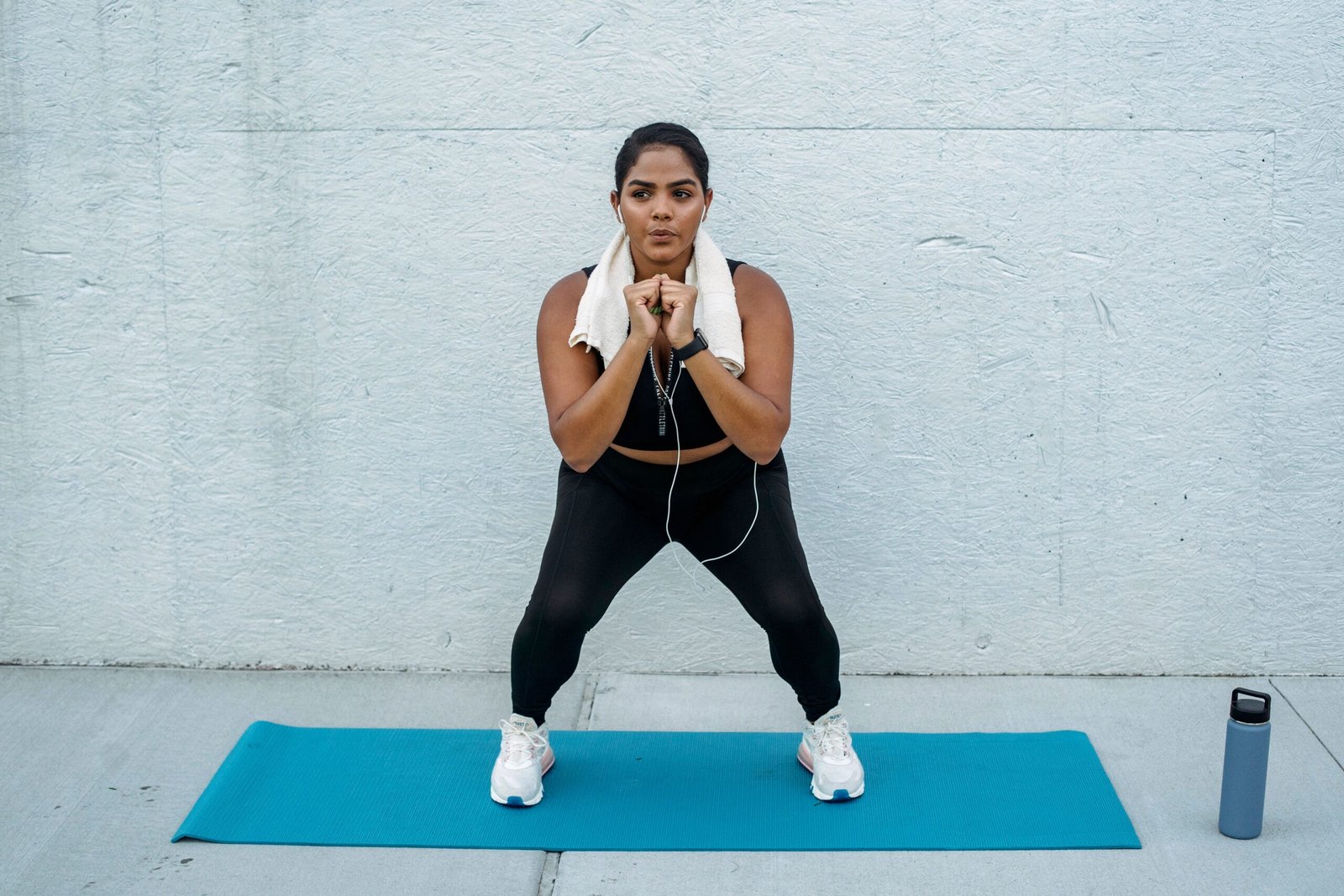
1. Do eight to twelve body weight squats, three sets. Stand with your feet shoulder-width apart, weight in your heels, chest up. Lower your body until your thighs are parallel to the floor. Rest 60-90 sec between sets.
2. Perform 3 sets of 6-10 incline push ups. hands on a sturdy chair or counter. The rep is easier on higher surfaces. In two seconds get down, in one press up.
3. Glute Bridge: 10-15 repetitions, 3 sets. Bend your knees, lie on your back, lift your hips, and squeeze at the top for a second.
4. Plank: 3 sets of 20-30 seconds head to heels in a straight row. If you have saggy hips, get down on your knees.
Day B: Lunge and row
1. Reverse lunge: 3 sets of 6–10 reps per leg Drop back, get your back knee to the ground and keep your torso tall. If you’re gonna fall, grab a door frame.
2. Doorframe row: 3 sets of 8-12 repetitions. With straight arms, squat and push your chest toward a sturdy door frame or the edge of a table. Don’t skip this as it is the plan’s pulling movement.
3. Step-up: 2 sets of 8 per leg. Use a step or a stair case. At the top, stand completely upright and press through the entire foot.
4. Bird dog: 3 sets of 6 reps per side. In a hands and knees position, extend the opposite arm and leg, hold for two seconds then switch.
Day C: Total Body Circuit
Do one set of each exercise back-to-back, then rest 90 seconds. Two full rounds.
10 squats with your own weight
Eight push-ups on an incline
10 glute bridges.
You should do eight reverse lunges with each leg.
20-30 second plank hold
There are six bird dogs on a side.
Circuits help keep a starting exercise regimen engaging, especially in week six when the novelty of Days A and B wears off and discipline must take over.
How Hard Do You Push?
Use the “two reps left” approach. Know you could have done 2 more clean reps at the end of each set but not 5. Beginners are taught exercises with bad form and train to failure so 300 repetitions of bad form can cause damage. Saving two reps gives you the same strength with a fraction of the danger.
The Progression Rule
The only thing you have to remember is this full advance method.
Week 1 and 2: learn the movements. Stop at the bottom of each rep range, even if it looks easy. Weeks Three and Four: Add one rep per set per week. Once you hit the top of a rep range, add weight to each set starting in week five. A bag of rice, a jug of water and a bag brimming with literature. Add 1-2kg at a time then go back to the bottom of the rep range.
That’s all.” Add reps and weight and repeat. And the ACSM says two non-consecutive days a week of resistance training can produce significant strength gains. This is the foundation of every reputable program ever created.
3 Mistakes That Destroy A Beginner Workout Plan
Adding a fourth day to the second week. Excitement is not fitness. Six sessions over a 3-week period is less effective than 3 sessions over a 3-month period.
constantly changing the exercises Repeated exposure will cause your body to adapt. The one time you tried the new exercise is never better than the 12 times you did the squat.
abandoning the exercise but not the guilt. Did you skip a day? “Shift everything one day forward. The habit doesn’t break but the routine does.
A Quick Safety Note
Do a few light squats and two minutes of easy marching before each practice to warm up. Muscle aches for a day or two are normal; joint pain is not. If you have heart disease, uncontrolled high blood pressure or a recent injury, check with your doctor before you begin any new regimen.
FAQ’s
Can I do this basic exercise program at home? Yes. All these exercises have been designed with the living room in mind.
When can I expect to see results? Usually strength appears in the first 3-4 weeks before any real difference can be seen. With consistency, you should see a noticeable effect in 6-8 weeks.
When is it better to go for weights? when even at the top of the range, with more weight, bodyweight reps aren’t hard anymore. Another great next step for variety NHS is the NHS strength exercise library.
Suggested internal links: FAQ pages on strength training for beginners and Home workouts for beginners
1 thought on “Beginner Workout Routine A Simple 3-Day Plan That Actually Works ”