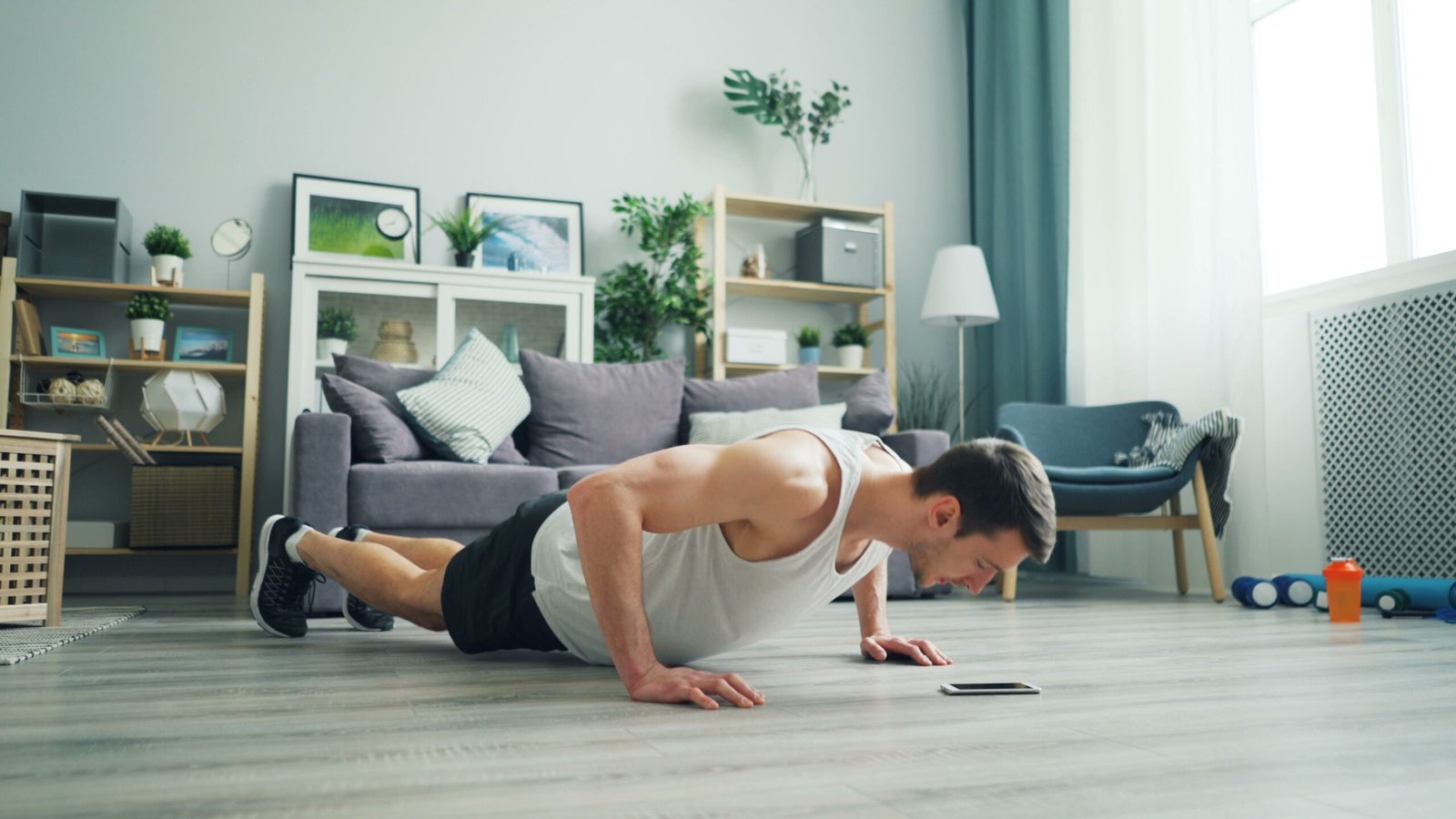
Home workout for beginners looks to clear the floor of any obstacles. Not a drive. No monthly fees. Don’t wait for someone to finish their set. You need 20 minutes, a sturdy chair and about 2 square meters of space. That’s the full equipment list. Here’s the complete circuit, the safe form cues, and the weekly routine that makes one workout a habit.
Why Home Training Works FAQ When to Buy Equipment
The fitness industry has sold people on the need for a place with mirrors and a card reader to get results. Other research suggests otherwise. Bodyweight programs with structure have shown an 11% increase in core muscle endurance and a 33% increase in aerobic capacity in research on regular Harvard Health participants. Bodyweight exercise also engages the small stabilizing muscles that machines often miss because your body has to stabilize itself, instead of being supported by a frame.
That is not a compromise for a beginner. It is the best place to start because if you can get self-control over your weight, all the following phases of training will be safer and more effective. The NHS lists simple exercises which can be done at home, such as a wall press-up, a calf raise and sit-to-stands, as being valid strength training, not a reduced version.
Home Workout for Beginners What You Actually Need
A bit of floor where you can stretch your arms and lie flat. A non-wheeled chair. Optional: mat, water, towel. The bag has adjustable weight so put books inside as the exercises get easier.
- No shoes required. Squats and bridges should be done on a mat, either barefoot or wearing socks, to feel the foot.
2. The Three-Minute Warm Up
3. You do not want to miss this. Cold muscles = stiff muscles
4. Stand in place and march for 60 seconds, lifting knees to hip height.
5. 30 sec arm circles forward and backward
6. 30 seconds of bodyweight good mornings. Hands behind your head, knees soft, hinge at your hips, stand back up.
7. Bodyweight squats, half depth, slow for 60 seconds
20 Minutes Circuits
Take a 60-90 second break after 6 workouts in a row. Finish the 3 rounds. It takes about twenty minutes all told, including the warm-up.
Practice
Reps:
12 chair squats
Inclined push-ups (chair or counter)
8
Bridges for glutes
Twelve
Birds Dogs
Six of each
Step-ups on bottom step
Eight on each leg.
plank 20-30 sec.
The first round will seem do-able. A beginner’s home workout earns its fame in the second round when your heart rate rises, your form is tested, and the last plank feels like twice as long as the first. It’s the third round that transforms you. If you fall out of your form, stop a set even if you haven’t hit the rep target.
Form Cues of the Big Moves
Chair Squat Lean back like the chair was hot. After a little tap with your glutes, get up. If your knees cave in, widen your stance During an incline push-up, your hands are directly under your shoulders, your torso is in a straight line and your elbows are tracking back at about 45 degrees, not flared out to the sides.
When doing a glute bridge push through your heels and not your toes. Squeeze your glutes really hard for a second at the top. If you feel it in your lower back, you’re lifting too high.
Plank: Tuck your hips a little and draw your belly button toward your spine. 15 seconds later you shake. That’s normal and okay.
Your Weekly Home Routine
Circuit 20 minutes Monday
Tuesday: walk twenty minutes
Wednesday: 20-minute circuit
Thursday: frost
Friday: 20 min circuit
Saturday: Long walk or stretch at your own pace
Sunday: total relaxation
Walking three circuits weekly meets the CDC’s recommendation of at least two days of muscle-strengthening activities per week and builds your aerobic base.
The Couch Problem What to Do
Difficulty isn’t the true enemy of a beginner’s home workout. It’s a gravity in the emotional sense, sofa is there and nobody’s looking,
Three fixes that work. The best way to do this is to pair the exercise with a habit you already have, such as doing a circuit before your morning shower, and not taking a shower until it is done. Second, leave your workout clothes in places where you might trip over them. Third, use the ten-minute rule: you can stop after ten minutes. Very few did, for the hardest part was yet to come.
When to Add Equipment
The circuit will simplify itself in 4 to 6 weeks. Don’t add any other exercises yet. Or use the backpack for step-ups, squats and bridges instead. If the backpack can take five kilograms and each set still feels comfortably near the top of the rep range, then a pair of adjustable dumbbells earns a spot. Your weight is enough for now.
A Short Safety Note
The most common home training injury is a foot slipping off a carpet edge, so clear the floor of rugs and pets before you start. It needs an extra repetition in each set. If an exercise causes extreme discomfort in places other than the muscles you want to work, change the angle or skip it. Anyone with a heart or joint problem should already see a doctor.
FAQ’s
Can real strength be built at home for beginners? Yes, for the first couple months. Before iron it is progressive overload . This is achieved through additional reps , slower pace , or a heavier backpack .
And how long before it gets easier? around the third week. Most also stop during that week because the urgency has gone away. but exercise.
I have no room as I live with relatives. Now what? You can do any of these exercises in the space of an open doorway. Noise sensitive? The step-ups are traded out for bridges and bird dogs.
You can also link internally to the Beginner Workout Routine in the weekly plan, and to your Bodyweight Exercises instruction in the circuit section.
1 thought on “Home Workout for Beginners: 20 Minutes, No Equipment Needed”