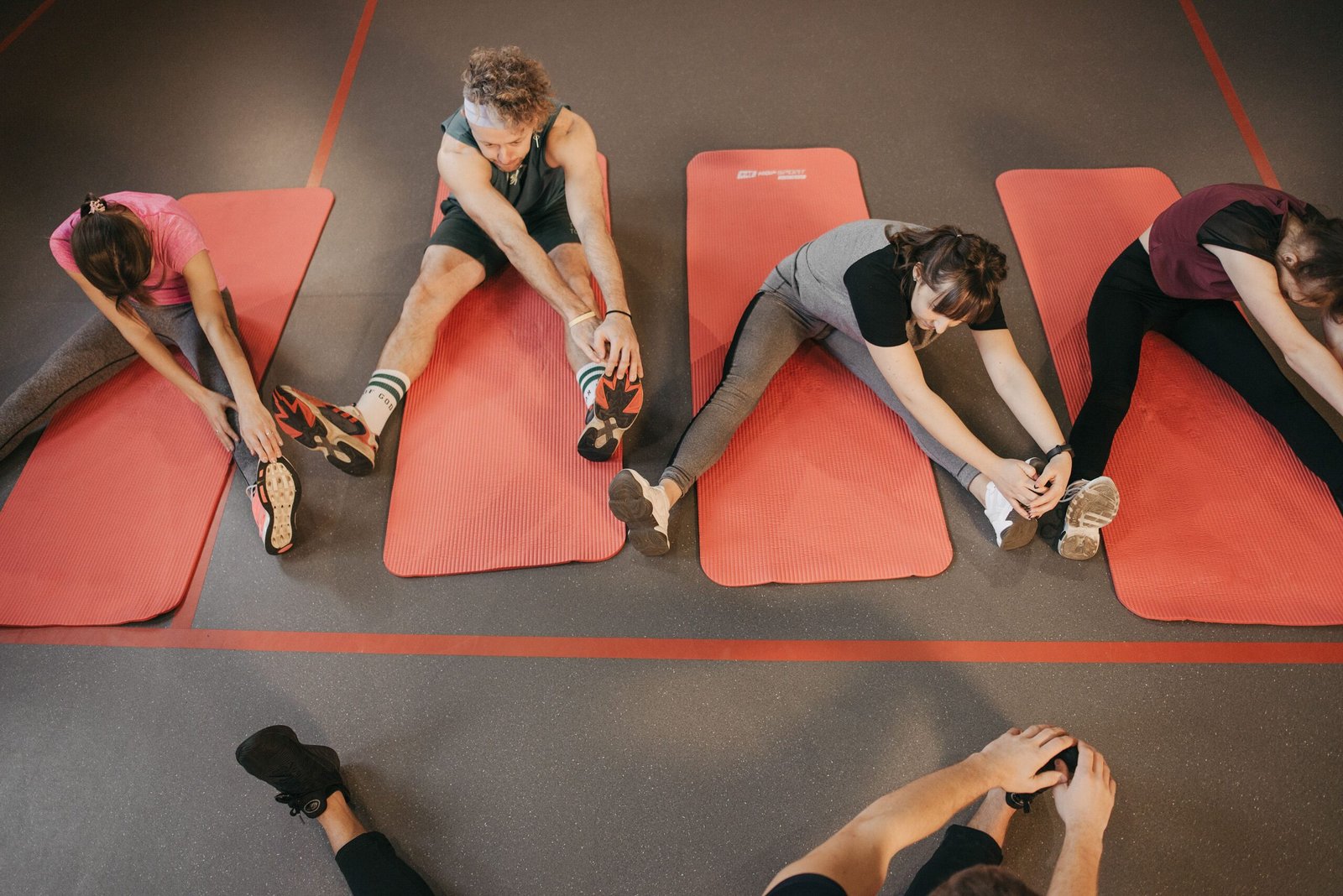
Enter any gym at 6 a.m. and you’ll witness two religious rituals: people rushing past the stretching mat in its entirety, considering it a waste of their precious forty minutes, and people stretching cold before they’ve moved a muscle. Both are wrong. But the stretching research is so obvious that I can say this nicely.
Stretching exercises, when done correctly, increase joint range of motion and flexibility, which the Mayo Clinic says is associated with better performance of physical activity, a lower risk of injury, more efficient muscles and easier mobility in daily life. If they are done badly they may do more harm than good. This article includes eight full-body stretches, tips on how to do them, and a routine to help you stick with it.
The True Effects of Stretching Exercises
Muscles are living tissue, not leather, but they also get shorter with age, use, and inactivity. After years of being shortened, the hip flexors of desk workers start to act like they own the space, pushing the pelvis forward and making standing up feel like a chore. Regular stretching exercises help the joint to regain its length and thus the full range of motion.
The Mayo Clinic’s take on the data is refreshingly honest: flexibility and range of motion benefits are well-established, but scientific support for some claimed benefits such as less soreness after exercise is conflicting. Stretch for the distance you’ll hold at 70, not for the pain you were told it would stop the next day.
Guidelines for Safe Stretching
Before the list of exercises comes the operation handbook, taken directly from the Mayo Clinic’s instructions: Never stretch when cold. After your workout, when your muscles are warm and flexible, stretch, or better yet, warm up ahead of time with five to 10 minutes of light walking or easy movement (Mayo Clinic).
Hold don’t bounce. Bouncing is the opposite of what is intended and produces a defensive reaction. So the muscle contracts. Slow release, steady hold, smooth entry. Each holding is thirty seconds. Work up to 60 in difficult areas. Each stretch should be done two to four times on each side.
No pain, only tension. Don’t flinch when you stretch to the point of a light tug. Back off until you only feel tension. Pain means you’ve gone too far. Look for symmetry not circus antics. Uneven flexibility is a risk factor for injury, and the Mayo Clinic notes that “normal flexibility on each side is more important than exceptional flexibility on one.”
The Eight Full Body Stretches
All eight stretches were taken from the Mayo Clinic’s own stretch library and hit all the major muscle groups in about 10 minutes.
1. Loosen up your calves. Stand at arm’s length from a wall with one foot back with the rear heel pinned to the ground and the front knee bent toward the wall until the back calf pulls. 30 seconds each side. Calves are tight. Each stride is a tax.
2. Hamstring stretch (wall variation). Lie in a doorway and have your leg nearly straight with one heel against the wall until you feel the back of your thigh pull. 30 seconds per side. The most accurate test for lower body flexibility.
3. Stretch your quads. Using a wall for support, lift one ankle up behind you, keeping knees together, tummy tight, until you feel the front of your thigh pulling. 30 seconds each side.
4. Relax your hip flexors. Kneel on one knee with the other foot firmly planted in front of you, and put your hand on the front leg for balance. Lean your body forward until the front of the kneeling hip pulls. 30 seconds per side. This is the most valuable stretch in the list and the chair-shaped hole most people have in their hips.
5. Stretch the knees to the chest. Lie on your back and slowly pull a leg toward you until you feel a tug in your lower back and glutes. 30 seconds in each direction. (This one loads the spine in flexion, skip if you have osteoporosis.
6. Draw your shoulders back over your body. Pull one arm horizontally across your chest using your opposite arm, you should feel the back of your shoulder pulling. 30 seconds each side.
7. Hang your towel over your shoulder. With one hand, hold a towel over a shoulder, reaching up behind your back with the other hand to hold the towel. Gently pull down with the top hand until you feel the back shoulder pull. 30 sec . per side . ” Range of internal rotation . Tennis players and golfers are the first to lose .
8. Stretch Your Neck Out Sit tall; drop one ear toward one shoulder; rest lightly the same-side hand on your head; and let the weight of the arm, rather than your muscles, deepen it. 30 seconds on each side
When should you stretch – before or after?
Practical explanation now . According to the Mayo Clinic, prolonged holds should be reserved for after exercise and a dynamic warm-up should be done before vigorous activity. Static stretching before vigorous activity may significantly decrease the strength of the muscles being stretched.
The clean routine includes leg swings, arm circles, easy squats and a five-minute movement warm-up. The static list above is performed in the evening or after exercise when the nervous system is happy to let go of tension and warm tissue is most receptive to length.
How Frequently & For How Long
The Mayo Clinic recommends stretching your major muscle groups at least two or three days a week, and says even five to 10 minutes at a time can help. The small dosage gives flexibility work a silent super power. The whole program is three 10-minute sessions a week, added to the end of your current workouts. Flexibility is rented, not owned, so the profits start to trickle in after a week.
Three Stretching Myths to Retire”Stretching stops soreness. The evidence is mixed at best, according to the Mayo Clinic. Don’t stretch because a gym brochure said you’d be immune from soreness, but because it gives you the range you’ll want at seventy.You should be able to feel your toes.“Anatomy does have a role in hamstring flexibility.
A quick safety tip
Don’t stretch a torn muscle . It won’t make the muscle longer, it will just make it angrier . If you have a strained or injured muscle, give it time to heal. If you are pregnant, managing osteoporosis or have a recent injury get a clinician or physical therapist to authorize or modify the list first. Some of these have conventional softer versions.
FAQ
So which is better morning or evening stretching exercises? It is evening technically. Muscles are warmest at the end of the day. Stretching in the morning is good if you warm up first and to be honest the best time is when you will actually repeat.
How long will it take for me to get more flexible? Most people see a big change in range after two to four weeks of consistent effort, but for tough spots like hamstrings, plan for months, not days.
Does stretching hurt at work? No, tension, a tremor perhaps, a silent curse. No pain at all. Pain means the tissue is protecting itself, and protected tissue doesn’t get longer.
1 thought on “Stretching Exercises The 8 That Work and How to Do Them Right”