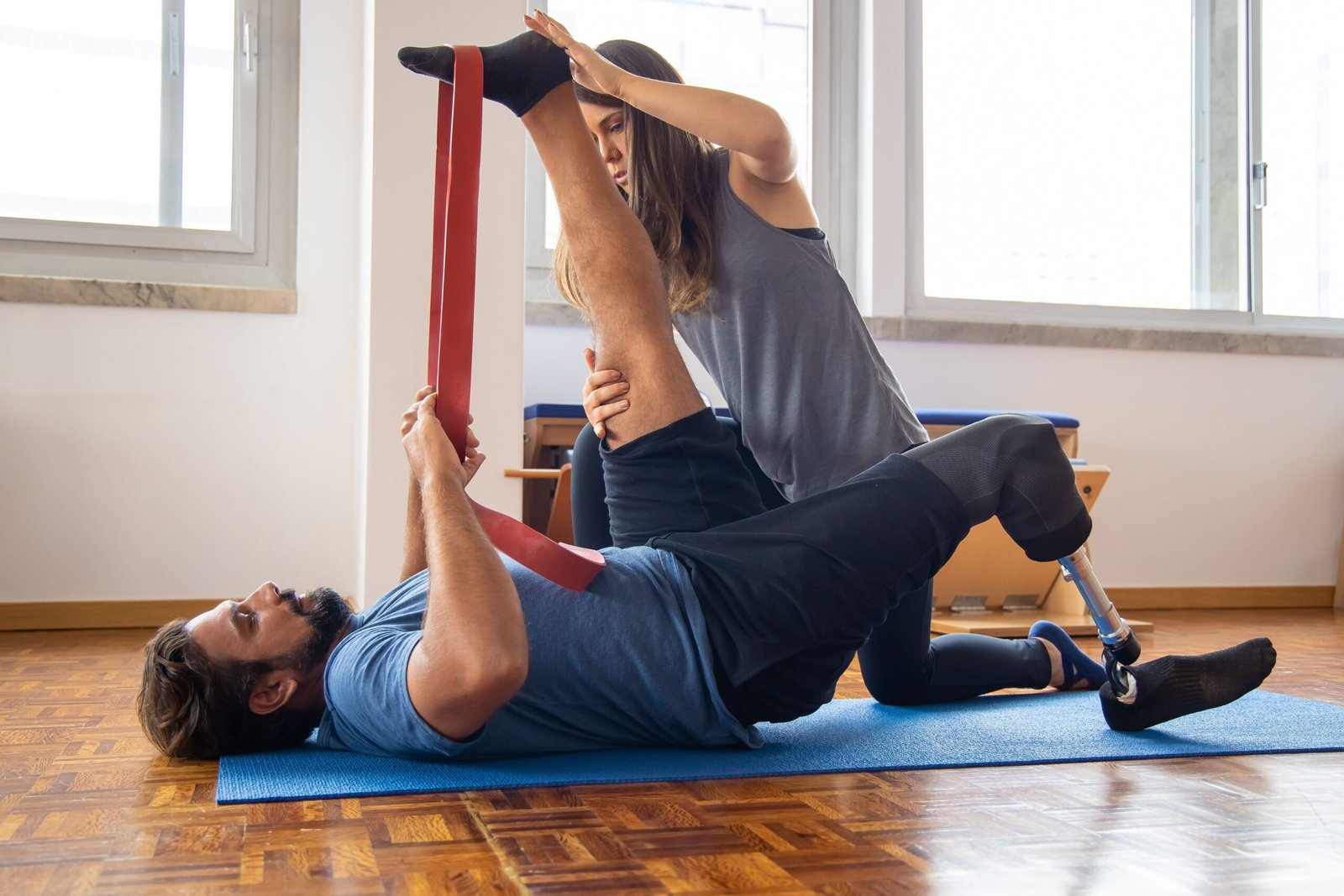
Before you go on, try to reach one arm straight up. If your face did something dramatic, your ribs flared and your lower back arched, it is not a shoulder issue showing up, but three stiff joints trying to do a job for which none were recruited.
Mobility training is meant to fill that void. Mobility training is activity that improves your ability to move in and around your joints, say specialists at the Hospital for Special Surgery. The average adult spends 10 waking hours in a chair, so it’s never been more important. Here’s what mobility is, how it’s different from stretching and a 10-minute daily routine that hits all the important joints.
Flexibility is Not Mobility
Flexibility is the ability to passively stretch the muscles and the ability to hold the splits with someone else’s help. Mobility is the extent to which a joint can be actively moved under ones own control. Mobility is a triple whammy—you need joint range, muscle flexibility, and strength to control the range. A gymnast with world-class hamstrings may also have shoulders that can’t get overhead without her spine cheating.
That last bit is what makes mobility training feel different from stretching. Stretching stretches the tissue. Mobility training is about getting into positions, pausing and owning them – not just hanging out in them. It teaches your nervous system that a new range is safe to use.
Why Chairs Are Quietly Killing Your Range of Motion
Joints feed on movement. Cartilage doesn’t have its own blood supply. Instead, it’s fed by a circulation-and-squeeze mechanism that happens only when the joint moves through its range. Your hips and mid-back just stop asking for their full range and gradually lose the option when you sit for 8 hours with your hips flexed at 90 degrees and your spine kept in one position.
The HSS mobility training guidelines are clear on costs: you cannot have limited mobility in one area without compensating somewhere else and that is where the overuse injuries are. The shoulder that pinches because the upper back forgot to extend Hospital for Special Surgery . The knee that complains because the hip quit contributing .
The Daily 10-Minute Mobility Training Routine
Move in and out of each position for one minute at each place. The rule “no equipment, no pain” is never used.
1. Nodding, do neck circles for a minute. Slowly make half circles from ear to ear and chin to chest. Ten quiet nods. This joint is what desk workers make their living on, so pay it first.
2. Wall slides and shoulder circles for 1 min. 10. Big, slow arm circles. Press your back against a wall and slide your arms up and down, keeping your forearms and wrists touching as long as possible.
3. Thoracic rotations for 1 minute. Get on your hands and knees, with one hand behind your head, and rotate your ribcage open toward the ceiling and back down. Ten on either side. The first joint that chairs steal is the mid-back.
4. Cat-cow for 1 minute. slow full spine cycles. Inhale to elongate and exhale to round.
5. One minute of hip circles. Place your hands on your hips and make as many slow circles as you can, five in each direction. Give the hips all the planes of motion you can.
6. 90/90 hip changes 1 minute One leg should be bent at a right angle in front of the other. Move your knees from side to side without your hands, if you can. Best hip opening drill ever invented.
7. The world’s longest stretch, 2 minutes long. Drop the back knee, lunge forward one foot, turn the upper arm toward the ceiling, and lower the opposite hand. Track your hand with your eyes. It’s one minute on each side, hitting the ankle, the hip and the spine all in one breath.
8. Ankle sway for 1 minute. In a half-kneel, with your heel planted firmly on the ground, rock your front knee over your toes ten times each side. Every stair climb and squat has a hidden factor, and that is ankle range.
9. Deep squat hold for 60 seconds. Grab a door frame and rock back and forth, going down into the most comfortable squat you can manage. Don’t fight it, use the frame to ease yourself into it.
The Division of Labor in Stretching and Mobility Training
They are not rivals, they are teammates. Static stretching is best for stretching chronically short muscles. It involves holding a position for about 30 seconds. The Mayo Clinic advises holding each stretch for about 30 seconds, breathing normally and avoiding bouncing. Mobility training adds control to that length. Practical split:
Mobility drills in the morning, or as a warmup when the joints need to be woken up, not put to sleep. Static stretches in the evening, or post workouts. You’re better off doing ten minutes of mobility before training than ten minutes of passive stretching because you’re actually practicing the motions you’re about to load.
When to do it: Ideally, every day. Most people do best with a morning routine since it is a caffeine-free wake-up and stiffness is at its worst after a nite of inactivity. Also, it fits perfectly after long meetings, commutes and flights and before any strength training. The ten-minute version, six days a week beats a 60-minute Sunday mobility marathon, because joints, unlike muscles, need small doses, regularly.
Three Mobility Training Mistakes
Strive for excellence without suffering. Discomfort in the end range is usual. Sharp pain is not. Work within your limits now and it will grow of its own accord. rushing and being cool. Two minutes of easy movement and slow down the reps. All that mobility exercises done at circuit speed means is flailing with a mat.
Because there is stretching. Ignoring it. Range without control is brittle. Your nervous system learns to trust the new length created by wall slides and 90/90s.
A Short Note on Safety Joint pain is a stop signal, not a stretch signal. Never push through joint pain, especially pinching in the front of the hip or shoulder. If you have a diagnosed joint problem, hypermobility or recently had an accident, see a physiotherapist first. Remember, mobility exercises are meant to complement, not replace, medical evaluation of a truly sore joint.
FREQUENTLY ASKED QUESTIONS
How long until mobility training shows results? Most people notice a marked improvement after two to three weeks of daily work. Joints respond quickly to a regular dose and regress just as quickly when you stop.
Can mobility training help me stand up straighter? One part of the posture problem is gone: stiff joints. The other part, endurance for holding superior positions, comes from strength training in a core routine.
Is yoga the same stuff? There is a lot of overlap and yoga is a great vehicle for the positions in this routine. Mobility training is a prescription with joints identified, but yoga is a practice with a philosophy.
1 thought on “Mobility Training The 10-Minute Daily Routine That Unlocks Joints”