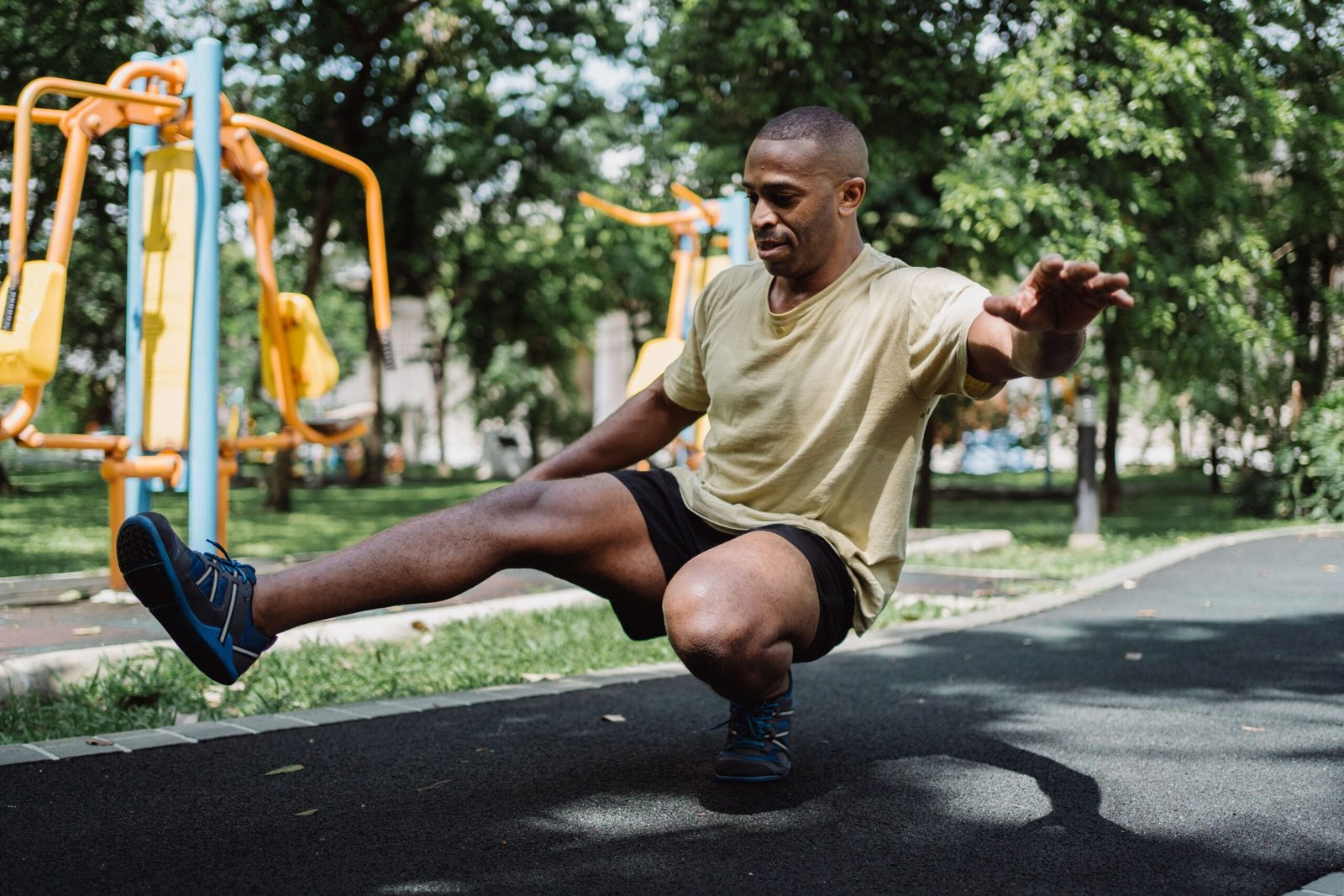
Balance Exercises CDC data indicates that nearly 14 million Americans over the age of 65 report falling each year, or 1 in 4. This statistic should put to rest the discussion about the importance of balance exercises. Falls are the leading cause of death from injury for that age group. The disturbing side note is that balance is a use-it-or-lose-it talent.
No one warns you when it’s slipping away because the decline is silent and the fall itself is often the first sign. There’s some good news in the data: balance responds quickly to training, at any age. Johns Hopkins Medicine says that strength and balance exercises can dramatically reduce the risk of falls. This article provides the six exercises worth doing, the order that makes them stick, and the weekly schedule.
FAQ:
Why Does Balance Vanish Without Anyone Seeing It?
Your body has three systems that work together to keep you balanced . Your inner ear , your vision , and the sensation of position in your muscles and joints . None of the three sends a letter of warning, and all three become dull with age. People notice downstream symptoms long after the underlying talent has faded: needing a hand on the railing to step off a curb, or standing on one foot to pull on a sock becoming oddly deliberate.
The stakes are clear from CDC falls data: nearly 14 million older people fall each year, and many of those falls lead to fractures, brain injuries, and a downward spiral of fear, inactivity, and decline. The cheapest way to stop that whole cascade is with balance exercises.
Who Needs Balance Practice?
It is obvious and essential that the single highest-return exercise goal for older persons after 60 is fall prevention. But in the truthful response there are three more groups. Athletes, because you need balance every time you change directions. Desk employees, who have a fixed posture that somehow alters their sense of position. And those who have already fallen, because the fear of falling makes them move less, which speeds up the very weakness that caused the fall.
6 Balance Exercises You Should Try Do all six next to a wall, chair back or counter. The support is a dial, not a crutch, so you are expected and allowed to use it.”
1. Standing on one leg. Grab the counter. Lift a foot. Wait ten seconds. Flip. 3 each side. The flagship drill is the simplest, most honest test of the entire program. Your progress here is 10 seconds to 30 to 45.
2. Walk heel to toe. Walk on a tightrope . Take 20 steps with your heel up against the toes of the other foot . This builds the very skill of walking in a restricted line that curbs and sidewalks require.
3. Stand up from a chair without your hands. Cross arms, rise from a chair without touching anything, then sit down again calmly. Eight times. The act of getting up is a controlled balance event, so it is also a balance drill and is the top of the NHS’s home strength exercises.
4. Changes in body weight. Slowly shift your weight onto your right foot until you are fully on your right foot. Hold for two seconds. Switch to your left foot. Your feet should be hip width apart. Ten times! This is the basic vocabulary and warm-up for balance.
5. Lifts for the heel. Gently grip the counter, stand on your tiptoes and lower yourself slowly. 15 repeats. The moment that truly makes a trip a fall is the instant when strong calves catch a stumble mid-misstep.
6. Step up. Stand with your face to the bottom stair, step up, control it, don’t bang on the way down. Eight on each leg. This is exactly the kind of single-leg control that is needed to climb down stairs in real life, and at exactly this height of step.
The NHS has a balance exercise library with similar exercises that can help you get a second opinion on making your home fall-proof.
The Progression Ladder
The progression for balance training is to reduce the base and the weight of support. The ladder works like this: Both hands on the counter, One hand, Two fingertips, No contact but hovering, No contact with your eyes darting around a fixed point, And for the truly daring, Closed eyes with a fingertip near. The ground is still there, so don’t hurry a rung. Fake it for 30 seconds is worse than actually single leg standing for 10 seconds.
Weekly Timetable
Workouts take minutes; work-life balance takes minutes. A true dose is 2 minutes, 3 times a week: Link a six-drill circuit to an existing behavior, such as brushing your teeth while the kettle boils or watching advertisements.
Always, even when you are feeling steady, do it near the counter. Every month, retest your single leg stand and write down the results.
All fall prevention guidelines and Johns Hopkins Medicine recommend pairing the drills with two strength sessions a week because strength gives you the muscle to save yourself and balance gives you the skill.
Strength and Balance: Rule of Two
Balance drills are the fire drills of places without a fire department. Resistance exercises such as sit-to-stands, heel raises, step-ups and bridges will build the calves, glutes and hips that do the catch. Harvard Health adds that a strong core helps with balance and stability, so dead bugs and carryover from a core routine are directly helping prevent falls. This is another spot where the systems overlap nicely. Two shirt wearing is the same project for strength and balance .
3 Ways You’re Screwing Up Balance Exercises
Only practice when you are steady. The entire stimulus is low volatility. It’s ok to put a finger-tip on the counter, but two hands holding while talking is just for decoration.
70 years of balance training savings. The expertise starts to go bad long before anybody notices. At 45, five minutes a week can buy a decade of ease at 65.
I have no training whatsoever and I’m barefoot on a hard floor. Start on a non-slip surface, close to support and in shoes or socks. Balance training should never be a cause of a fall.
FAQs
Can balance exercises prevent falls? Research suggests they are especially helpful when combined with resistance training, and that is exactly how fall prevention programs are organized, such as those run by the NHS.
How much longer before my one-leg stand gets better? Over a month of three short weekly sessions the average person gains 10 to 20 seconds.
What about tai chi? Yes, sure. Tai chi is listed by Mayo Clinic as an exercise for fall prevention, with its gradual weight transfers being balance training from a centuries-old Mayo Clinic syllabus.
1 thought on “Balance Exercises Six Moves That Prevent Falls”