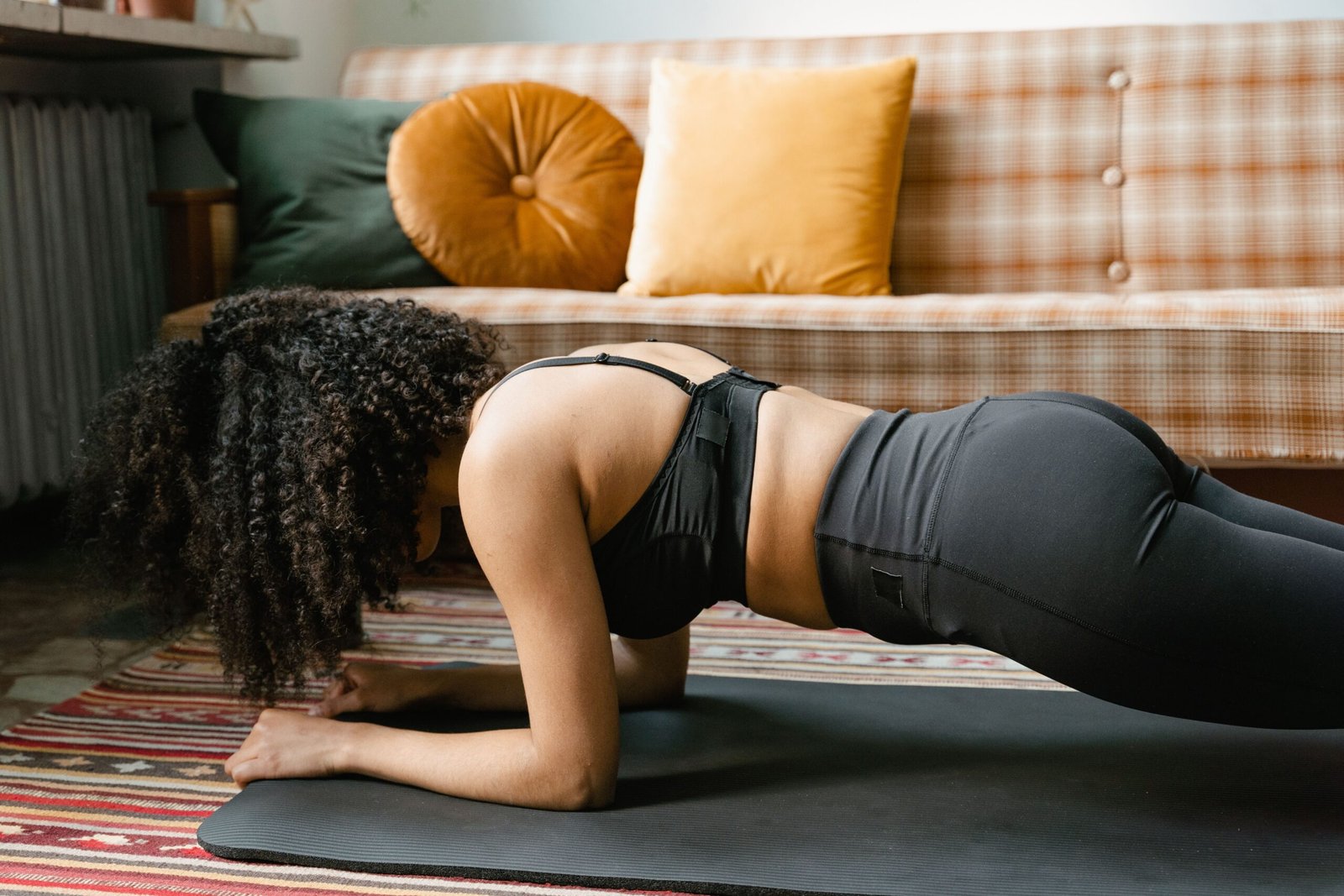
Core Strength Exercises the word core has been overused so much in ab-burner videos that it has lost all meaning. So, let’s get one thing straight. Your abs and stomach are not your core. It is your entire muscular cylinder — the deep abdominal wall in the front, the spinal erectors in the back, the diaphragm above, the pelvic floor below, the obliques on the sides, and the hips and glutes that hold the whole thing up — that stabilizes your spine.
According to Harvard Health’s simple job description, a strong core helps with balance and stability and prevents falls and injuries in sports and in everyday activities like housework. In this article, I’ll explain why the popular exercises don’t work, the core strength exercises that do, and a 10-minute routine you can do in any space.
What the Core Actually Does
You’d buckle your spine under pressure like a deck of cards, like a pile of bricks. When you lift, twist, reach, sprint or sneeze hard, force is transmitted through your core muscles which are keeping those blocks stacked. Harvard Health cites practical benefits such as improved performance in sports like tennis and sweeping, improved posture, and considerable protection against back problems caused by haphazard, untrained twisting.
That’s the specification sheet. You’re working on a corset that holds you steady and 360 degrees of responsibility, not a six-pack.
Why You Shouldn’t Do Crunches
Crunches are an old-school move that works spinal flexion . The main muscle being worked is the rectus abdominis , which contracts very frequently . They don’t train the core to do what it’s supposed to do, which is resist movement very often.
Backs complain about rotation under load, sudden extensions, and carrying kids sideways. No one has ever thrown out their back doing an exercise shaped like a sit-up. Most people’s training lacks the stability component, not the flexion component, so Harvard Health’s own exercise recommendations for a strong core lean more toward planks and bridge variations than high-volume crunches.
Then there is the issue of volume. Performing hundreds of crunches each day could lead to a repetitive-motion complaint in the lower back, the exact area of the body the exercise was designed to protect. The Anti-movement PrincipleThe organizing principle of effective core strength workouts is “anti” training. Three of the four jobs of your core are denials: Anti-extension: dead bugs, planks and no arching.
Six Core Strength Exercises You Must Do
1. Dead bug On your back, arms overhead, knees bent at 90 degrees. Lower the opposite arm and leg toward the floor, keeping your lower back down. This list begins with the safest place to start: anti-extension with no spine load.
2. The bird dog. Kneel, put out one arm and the opposite leg, hold for two seconds, then switch sides without tilting your hips. Foundation exercises used in physiotherapy clinics and the NHS are anti-rotation and hip control exercises.
3. Plank on forearms. The anti-extension property is as usual. Tucked belly button, firm glutes, straight line. If 45 seconds is easy, you have graduated, not achieved enlightenment. Use more difficult versions of the exercise, not longer versions.
4. Side Plank. Line from head to heels hips up knees or feet stacked. The ultimate anti lateral flexion exercise, the true function of the obliques.
5. Glute Bridge If you’re lying on your back, drive out through your heels and squeeze at the top. In the Harvard bridge-based instruction you start with the glutes, the foundation of the whole core system.
6. The farmers’ carry. Walk 30 seconds with your ribs over your hips and a lot of weight in both hands. They silently train anti-lateral flexion, posture, and grip all in one action and benefit more everyday chores than any crunch ever captured on camera.
Side Plank: 15-20 sec per side
Round one will feel insultingly simple, because this is a regular appointment, not an event. It does all the anti-movement tasks in under ten minutes and three times a week and it works well on its own or after strength training.
Back Pain & Core Strength
Let’s get specific: most people approach core training through their lower back. Having a stronger core is one of the habits that help prevent low back pain according to Harvard Health and controlled, mild core practice is one of the most commonly recommended treatments for mechanical low back pain. But before initiating a self-prescribed plank program, nagging, radiating or increasing back pain should be evaluated by a physician. The best training is a checked back.
Moving Forward
Increase the challenge one dimension at a time. Hold for 20 seconds, then extend to 40 seconds. Then to a joint shift: death bug to slow-motion dead bug with three-second lower, bridge to single leg bridge or plank to plank with alternating shoulder taps. Then add a load. A weight in one hand for carries, a dumbbell or a child on the chest for bridges. The entire structure of government is based on the notion that the set ends the moment the form quivers.
3 Mistakes to Correct This Week
The boards are drooping. When you wear a plank costume, you should be lying with your hips down and your lower back pinched. Get on your knees and hold on tightly. with your breath held. Tightening is what bracing means, not inflating. “Breathe shallowly and regularly through each hold.
The core lasts a lifetime. No fried-core ending workout is stabilized. Two quick focused exercises a week after squats lasted longer than six tired minutes.
A Safety Advisory
If your exercise causes severe or radiating pain stop . Muscle shaking is OK , nerve sensations are not . One thing at a time. If you are pregnant, recently given birth, or have a diagnosed back disease get a clinician’s approval before loading the trunk. These exercises must never do you more harm than good.
F.A.Q.
Can core strengthening exercises help you lose belly fat? No. Fat is lost systematically through total energy balance, spot reduction is a myth. They build strength and stability underneath.
How frequently should I work my core? The ideal number of short workouts a week is two or three. Push-ups, squats, and carries also work the core indirectly.
Gym ab machines – are they worth it? Almost all of them train the least effective core function, flexion. They’re better on every important task than the six workouts mentioned above.
1 thought on “Core Strength Exercises Build a Midsection That Works”