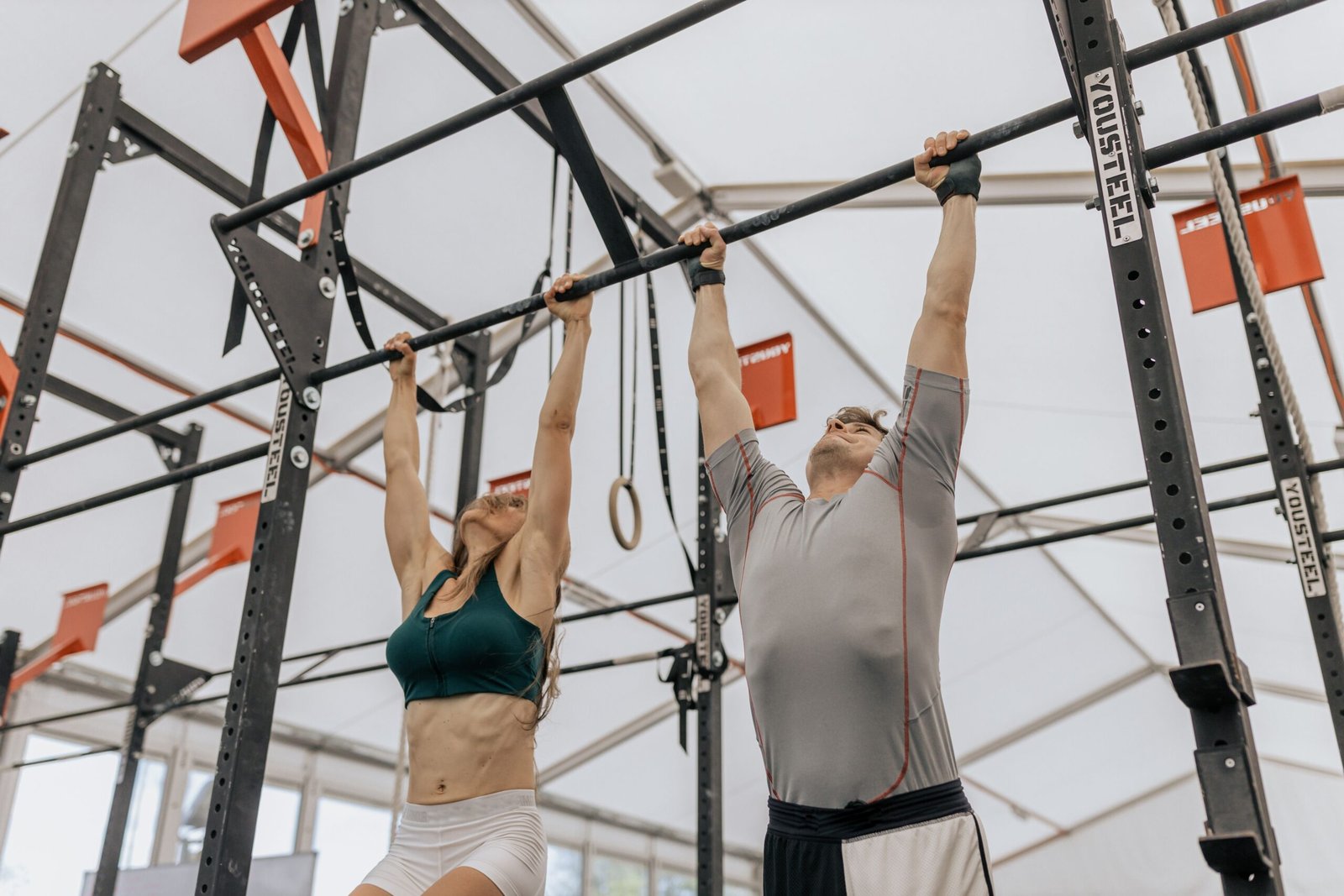
Functional fitness training bench presses are great exercises and you don’t often do them in your kitchen. Life doesn’t ask you to lie on your back and push a bar. It asks you to hoist the suitcase into the overhead bin, get up off the floor, carry everything at once, and spin to grab the kid before the stairs get involved. Functional fitness training is available for just this gap.
Functional fitness exercises, according to the Mayo Clinic, mimic the common movements you do at work, home or in sports, use multiple joints and muscles at once, and train your muscles to work together for your daily activities. I will explain what that actually means in practice, and then I’ll give you a full session based only on that in this post.
FAQs
The Real Meaning Of Functional Fitness Training
Functional fitness training is based on one concept, carryover. A practical exercise will be held next month, allowing some real world action. For example, the Mayo Clinic recommends multidirectional lunges, standing rows and squats—all multi-joint exercises that engage muscles to work together, not independently.
Notice the absence of: the words “hardcore,” “sport-specific,” and any mention of uneven surfaces. Functional does not mean doing circus tricks on a bosu ball. Standing, reaching, carrying, bending and turning are all realistic moves and the load helps your body improve on them.
The Six Daily Movements
Each practical work can be reduced to one of six patterns. Functional fitness training just loads each: Squats up and down Loading the dishwasher Getting off the toilet Sitting in chairs Part of this is hinging at the hips — lifting laundry baskets, picking up kids, unloading the trunk. Getting Groceries, Bags & a Wriggling Ten-kilogram Person to Their Destination.
Lawnmower on its first pull, door that sticks, overhead suitcase: push and press Pulling: the dog sees a squirrel, the heavy door, the garden hose sidestepping and turning to get to the back seat avoiding the floor toy When you train all six once a week, you’re training the full schedule of everyday life. Rehearsal is the “function” in functional.
Why machines are only partly eligible
Life isolates nothing, pins you into no position, a sitting machine isolates one muscle. There’s still a place for machines. They’re great for building raw strength safely. And that strength does transfer. But a workout that only targets the sat doesn’t have the grip, balance, and coordination needed for real jobs. CDC guidelines recommend muscle-strengthening exercises that target each of the main muscle groups at least twice a week . Multi-joint movements achieve this goal in far fewer sessions.
The Complete 30-Minute Functional Session
Begin by warming up with 10 slow squats, 10 arm circles and 3 minutes of easy marching.
movement
Work out
Reps × Sets
Squat
Chair sit-to-stand followed by goblet squat
3 x 10 Connector
Romanian Deadlift with Dumbbell or Backpack
3 × 8–10
Bring any
Farmer’s load, heavy in each hand
3 x 30 sec
Push
Floor or counter push-ups
3 × 8–12
Pull
One-arm row with band or backpack
3 x 10 each side .
– Turn or change
Lunge back and stretch across your body.
They are 2 across by 8.
Rest for 60 to 90 seconds between sets. Every exercise on this list has a direct antecedent in your week: the lunge-and-reach is the thing you dropped behind the car seat, the carry is the groceries, the sit-to-stand is every chair you own.
Equipment: Not much
A functional session requires less equipment than a picnic. Bodyweight. All patterns early on. A bag of books replaces a set of dumbbells, in one-kilo increments. You don’t need a dumbbell or kettlebell. It’s a luxury. Sit-to-stands, wall press-ups, calf raises and the NHS’ home strength library are essentially functional fitness exercises that need no equipment.
Transferring Advancement
Progress in the way life becomes more difficult, not the way Instagram does. First, reps should be added to the top end of the range. There is no momentum discount in reality, so slow down the descending phase. Then fill the backpack. And finally, mix patterns: deadlift-to-row, squat-to-carry, lunge-to-press. Mixing two circuit-style workouts, this one starts to look like a weekly obstacle course for a functional fitness training session.
Who actually needs it
Three groups, in order. Desk workers: bodies quick to forget patterns, daily lives a minimum of actual movement. Parents of young children in unpredictable and time-sensitive sports. The sit-to-stand and floor-to-stand tests are also very clear indicators of independence for persons over 50 years.
One of the most obvious signs of functional aging is the ability to get out of a chair without the use of your hands, which is why the NHS ranks the sit-to-stand exercise at the top of its list of strength exercises that you can do at home.
3 Training Mistakes for Functional Fitness confusing “different” with “functional.” It’s not practical and not common to juggle while balancing on a wobble board. The six patterns are used in loaded versions.
Briefly: A Safety Note
First learn each pattern with bodyweight or without a weighted backpack. Keep a neutral spine for hinges and carries, carry is only effective when it is heavy, not twisted. 1. Leave one rep in reserve. 2. Exhale hard. 3. Stop if you feel sudden joint pain. First, if you have a chronic illness or have recently been injured, get the program cleared by a doctor or physical therapist.
FAQs
Is functional fitness training effective for weight loss? It’s a great structure: lunges and carries burn a lot of calories and full-body multi-joint activity uses the greatest amount of muscle per minute. “Diet is still the biggest factor.
Can I do it at home without equipment? Yes, for sure. Both the above session and the NHS library are powered by backpack and bodyweight.
What is the difference between this and a full body workout? Functional fitness is a selection principle and a full body workout is a scheduling scheme. This workout is both full body in design and functional in exercise selection.
1 thought on “Functional Fitness Training Strength You Can Use Daily”